
Components Simulation
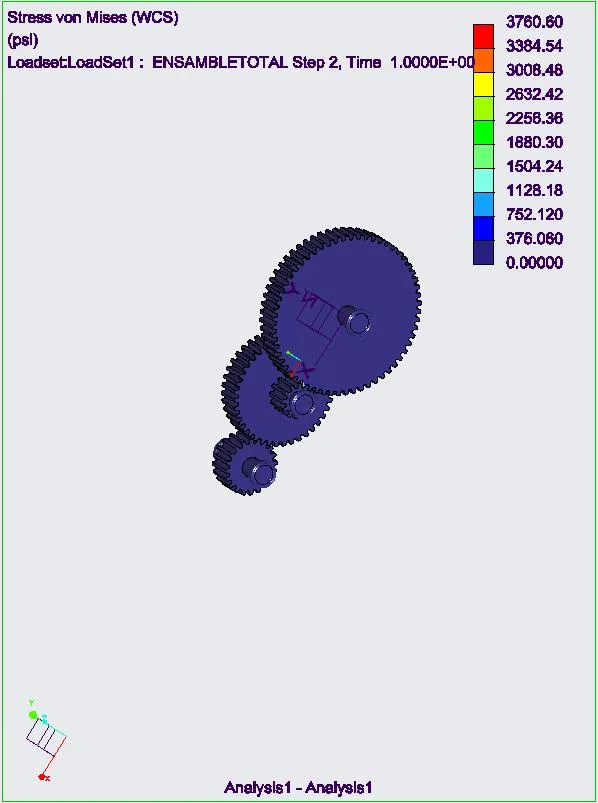
Objective
Simulate the effect of the forces on a gear train
Understanding the Gear Train
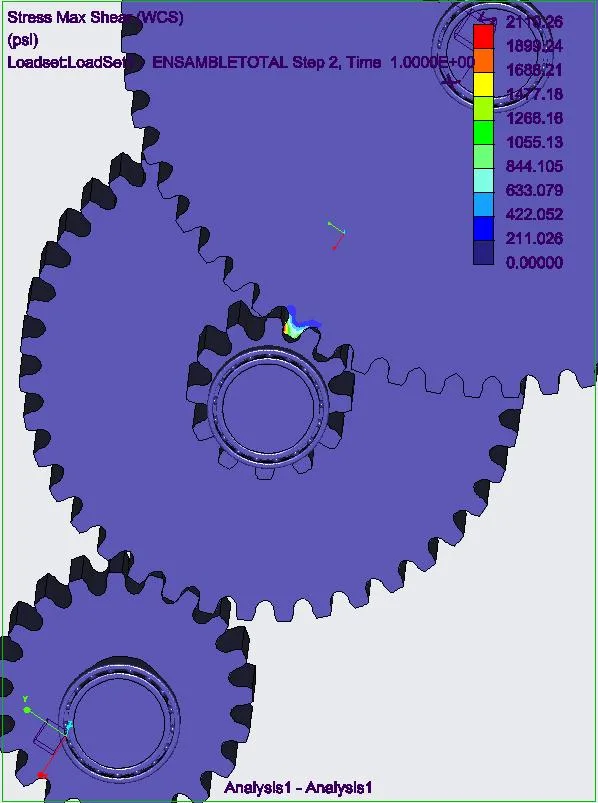
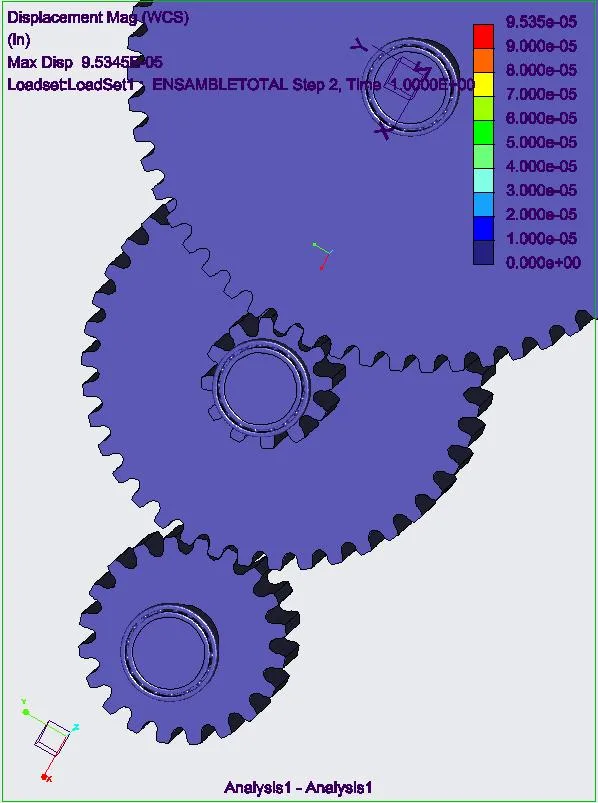
A gear train trades rotational speed for torque and can reverse rotation. Kinematic ratios describe ideal motion; they do not account for friction, tooth flexibility or losses. The simulation images illustrate the assembled study, but the original tooth counts, loading and material settings are not supplied here.
Testing and Real-World Use
This could be tested by comparing predicted speed ratios and rotation directions with a constrained CAD assembly, then evaluating loads separately. Gear-train analysis is useful for selecting motion and torque relationships, but a correct kinematic ratio alone does not verify strength or service life.
Results
PREVIOUSGears Analysis